

BSC Leaders Meetings in Podgorica Highlight Regional Challenges Amid Global Shifts
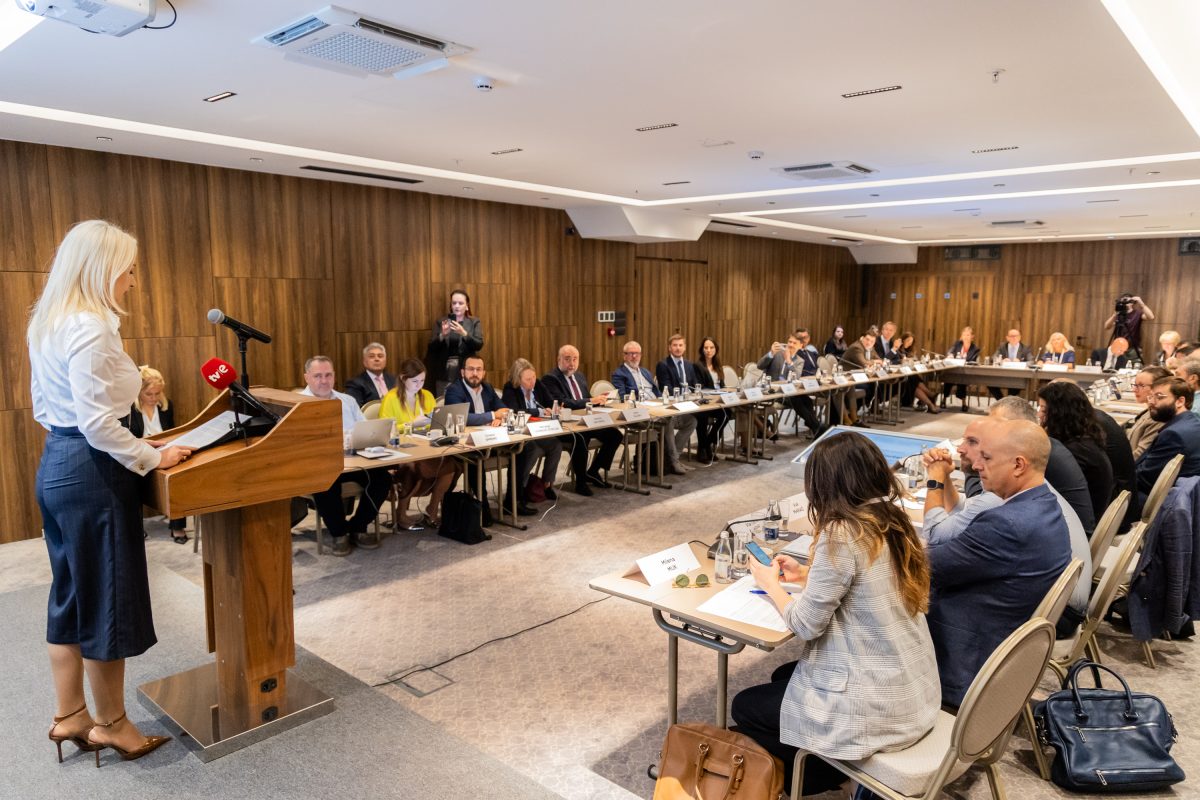
The Belgrade Centre for Security Policy (BCSP) hosted the latest edition of the BSC Leaders Meetings, bringing together diplomats, policymakers, scholars, and civil society representatives for an in-depth discussion on the Western Balkans’ strategic direction in an era of rapid global change. Over the course of the gathering, participants examined how shifting geopolitical dynamics, democratic backsliding, and uncertain EU enlargement prospects are reshaping the region’s political landscape.
The event opened with remarks by Ambassador Kristin Melsom, Norway’s Ambassador to Serbia, and Srđan Cvijić, President of BCSP’s International Advisory Committee, who both underlined the importance of sustained dialogue at a moment when the Western Balkans faces renewed pressures. Maida Gorčević, Montenegro’s Minister of European Affairs, set the tone for the day with a keynote address that emphasised the region’s continued aspirations for deeper European integration.

Global Rivalries and Their Impact on the Western Balkans
The first session, “Through Midgard’s Mist,” turned attention to the growing complexity of global geopolitics and its implications for regional security. Speakers explored how shifting U.S. foreign policy, Russia’s evolving influence strategy, and China’s economic expansion have deepened the strategic competition playing out in the Western Balkans.

Contributions from Nedžma Džananović Miraščija (University of Sarajevo), Karsten Friis (NUPI), and Vuk Vuksanović (BCSP) highlighted the multifaceted pressures confronting the region, including hybrid threats, disinformation, and increased vulnerability to external leverage. Their interventions set the stage for a dynamic discussion moderated by Ambassador Arne Sannes Bjørnstad, Norway’s Ambassador to Croatia, who underscored the need for stronger transatlantic coordination at a time of heightened uncertainty.

Authoritarian Trends and the Shrinking Democratic Space
The conversation then shifted to domestic governance challenges in the second session, “Fenris Unbound,” which examined the rise of authoritarian tendencies and the erosion of democratic institutions across the Western Balkans. Speakers painted a concerning picture of shrinking civic space, weakened checks and balances, and increasing pressure on independent media.
Vessela Tcherneva (ECFR), Igor Bandović (BCSP), Srđan Blagovčanin (Transparency International BiH), and Ramadan Ilazi (Kosovar Centre for Security Studies) offered detailed perspectives on how these negative trends have intensified, particularly in the wake of changes to U.S. foreign aid that have reduced support for democracy-promotion efforts. Moderated by Ambassador Kristin Melsom, the discussion highlighted that, in the absence of sustained international engagement, regional strongmen increasingly feel emboldened to adopt restrictive laws and further centralise power.

The EU at a Crossroads—and the Region With It
The third session, “Peer Gynt’s Dilemma,” focused on the uncertain future of EU enlargement. Even as the Western Balkans continues to view EU membership as its primary strategic goal, political fragmentation within the EU and rising Euroscepticism are slowing progress. Speakers noted that unresolved bilateral disputes, internal divisions in Bosnia and Herzegovina, and strained relations between Serbia and Kosovo continue to undermine cooperation and delay reforms.
Impulse interventions from Milica Delević (EBRD), Biljana Papović (Government of Montenegro), and Srđan Majstorović (CEP) drew attention to both the opportunities and the constraints facing the region. Moderated by Ambassador Kathrine Biering, Norway’s Ambassador to Bosnia and Herzegovina, the session explored how initiatives like the Berlin Process can support regional connectivity—while acknowledging their limitations in the absence of strong political will.

Closing Reflections
The event concluded with a joint plenary by Ambassador Arne Sannes Bjørnstad, Ambassador Kristin Melsom, and Ambassador Kathrine Biering, who emphasised the need for strengthened regional cooperation, democratic resilience, and a credible European integration pathway.
