

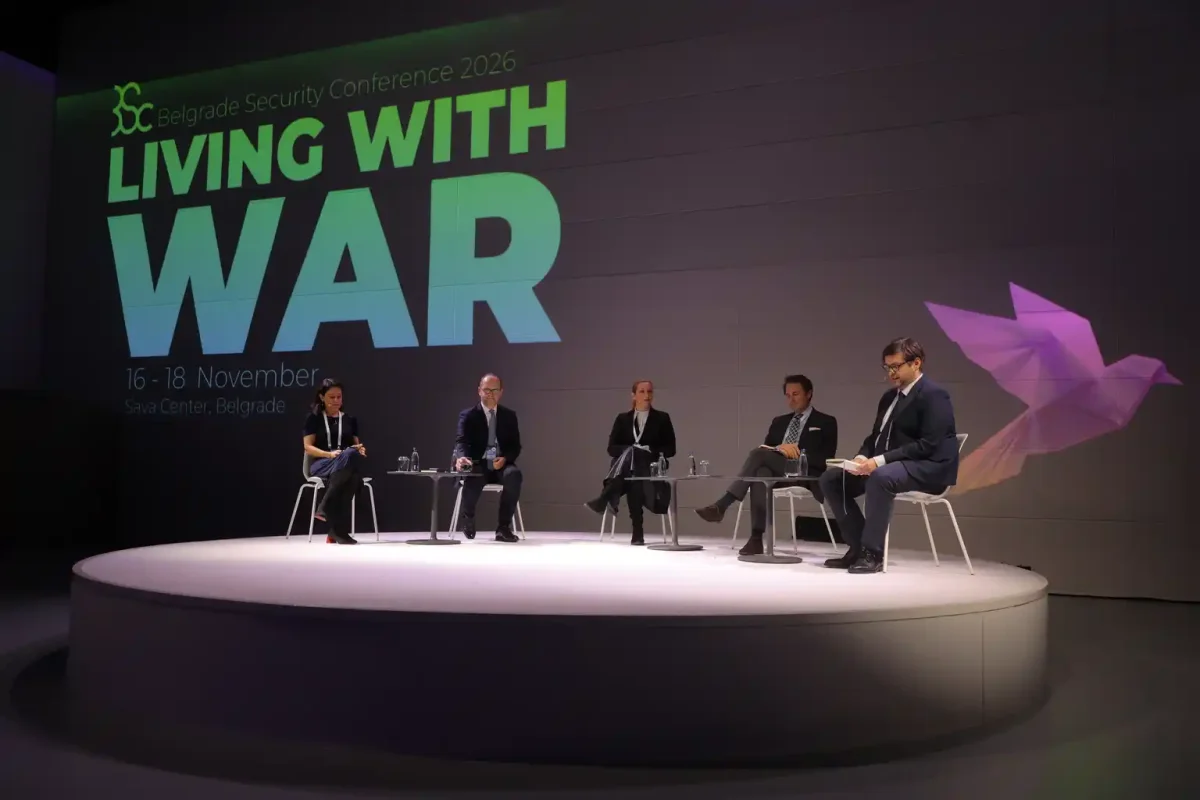
The panel “Front-Runners and Fault Lines: Testing the EU’s Enlargement Credibility” focused on the EU’s enlargement policy, aiming to reconcile the differing realities of EU member states and candidate countries and bring their perspectives into dialogue.
The panel was moderated by Adnan Ćerimagić, senior analyst at the European Stability Initiative, who reflected briefly on the Berlin reality of the enlargement process. The panellists agreed that the EU needs more creative and bold ways to gradually integrate candidate countries before full-fledged membership.
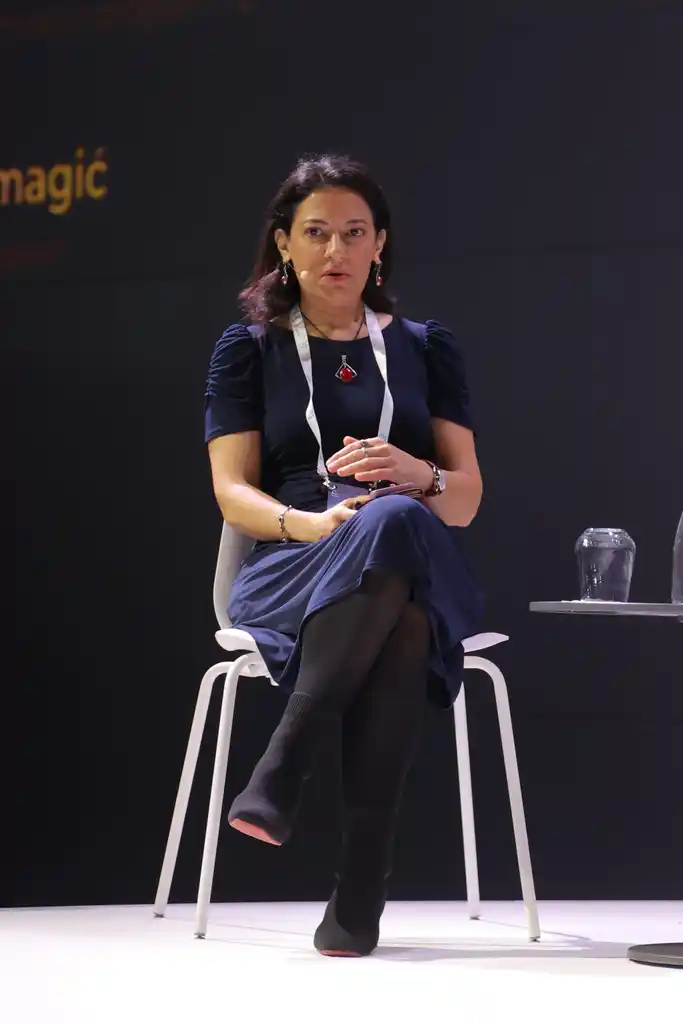
Oana Popescu-Zamfir, Senior Research Fellow – European Security and Head of the RUSI European Security in Transformation programme, acknowledged the changing political climate in Europe and across the Atlantic in regard to Trump’s peace negotiations on Ukraine. She stressed the need for a “tangible integration of Ukraine into Europe” but does not believe that there would be any speeding up of the accession process. In the context of dynamic international relations, she also spoke on associate membership, viewing that becoming part of Europe is a “security guarantee” in the context of Moldova, Ukraine, and potentially the Western Balkans. She stressed that the Western Balkan countries should use this opportunity to co-create their own accession process. “The EU needs to ‘close ranks with all like-minded allies’,” she concluded.
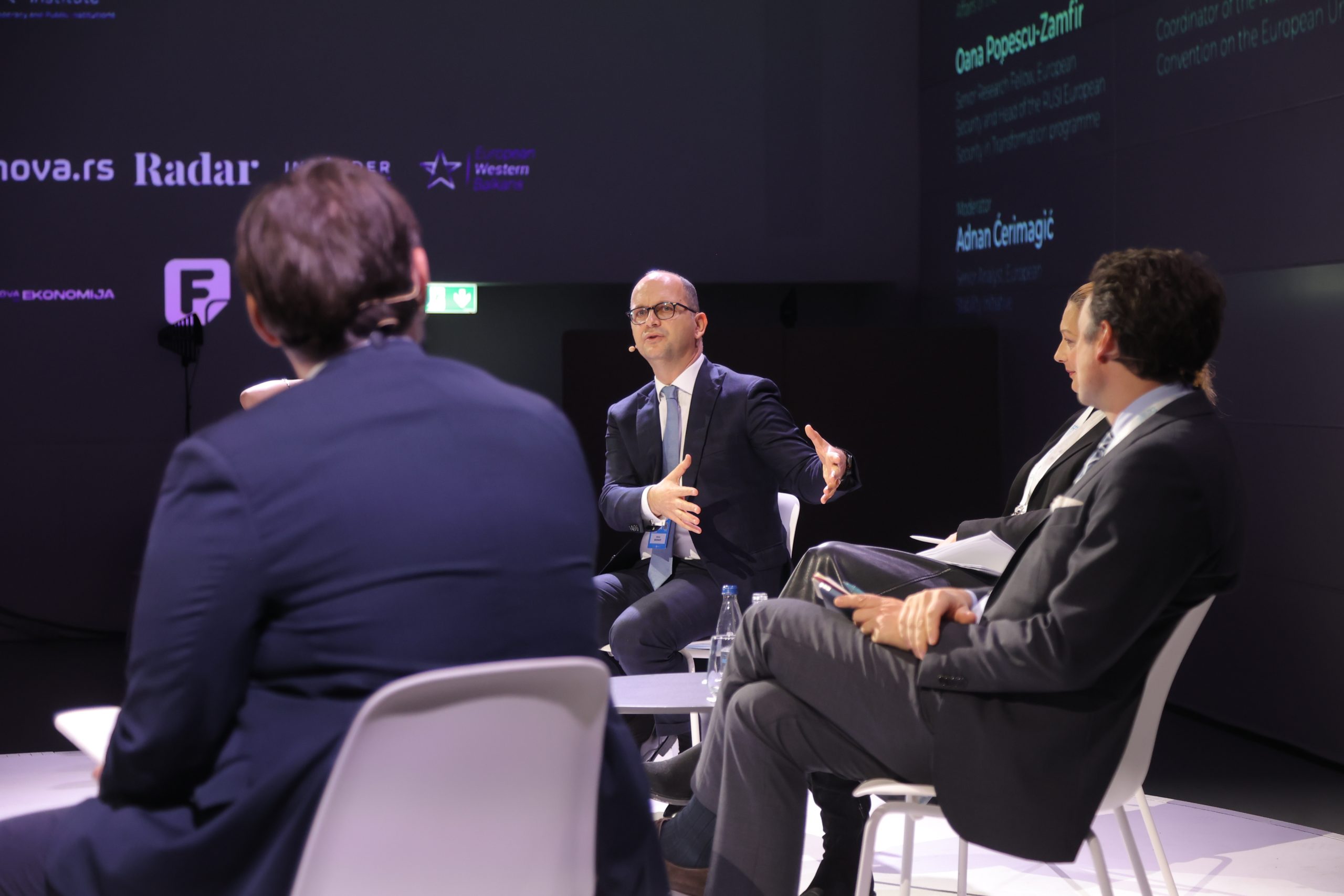
Ditmir Bushati, former minister for Europe and foreign affairs of the Republic of Albania, reflected on the developments in Albania, which became the second best–ranked candidate, surpassing Serbia in preparedness for accession. He shared his belief that Albania is pursuing a “split-stream’” approach towards its accession, closing less-burning chapters, while democratisation and environmental policies remain a challenge in this process. He highlighted the large civic mobilisation in the country and the Flamingo Revolution, believing it shows the willingness of the people to see democratic change, similar to the experience in Serbia. He noticed that there is a direct improvement in daily life once chapters are closed, but he did show his concern regarding the lack of correlation between the analysis of the EU Commission and institutions such as OSCE, Transparency International and others.
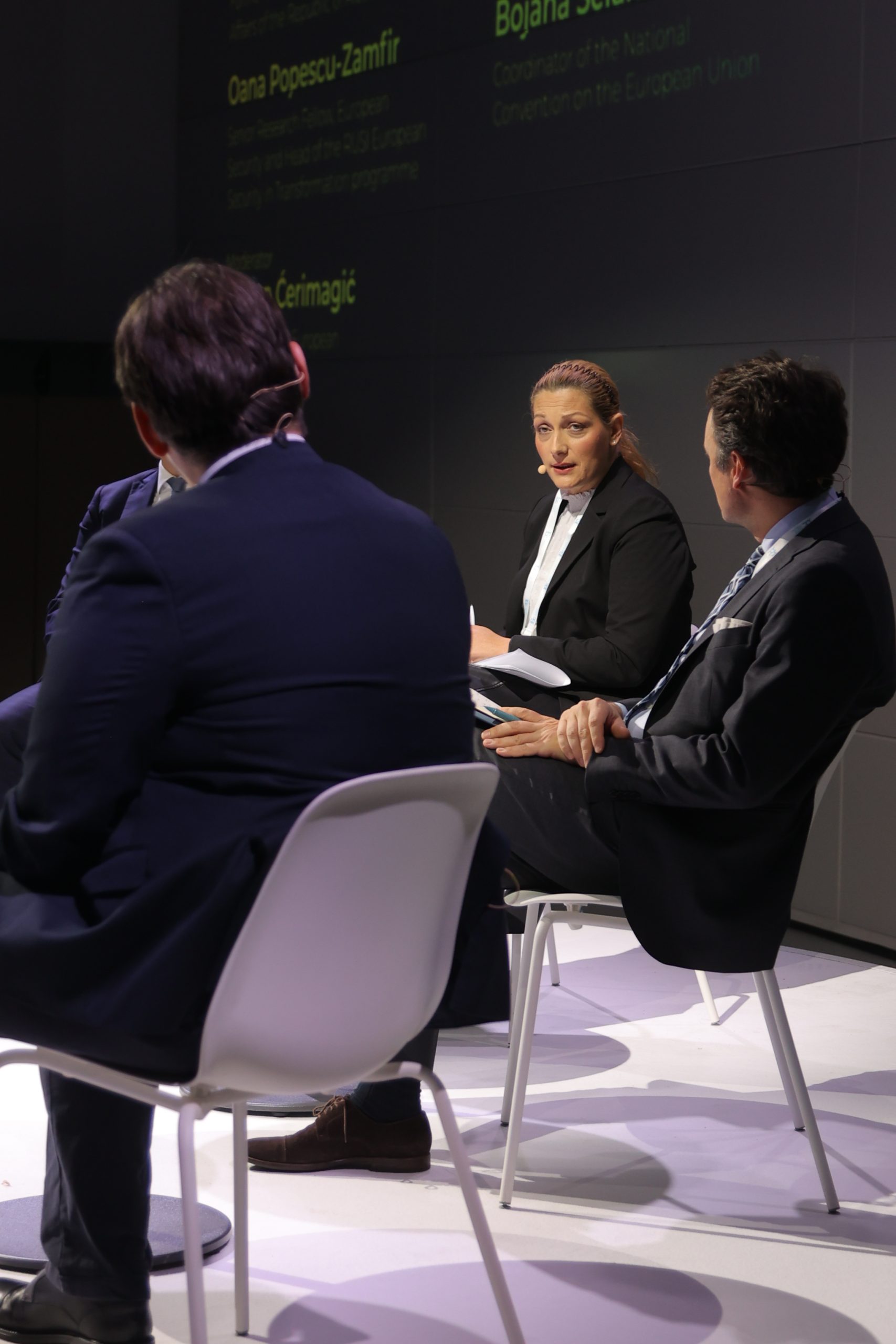
Bojana Selaković, Coordinator of the National Convention on the European Union, spoke on her experience attending this year’s EU Enlargement Forum, where she stressed a grave difference in atmosphere in comparison to prior years. Regarding EU-Serbia relations after the change of government in Serbia, Selaković stated there is a “willingness and optimism on both sides”. She cautioned that change would not happen overnight in the country and stressed that the EU should avoid placing excessive pressure on Serbia over sensitive issues, such as relations with Kosovo and Russia, at this stage. Selaković argued that much of the toxic foreign influence in Serbia is linked to weaknesses in the rule of law, corruption and media capture, and that expected improvements in these areas should also have a positive impact on the country’s foreign policy.
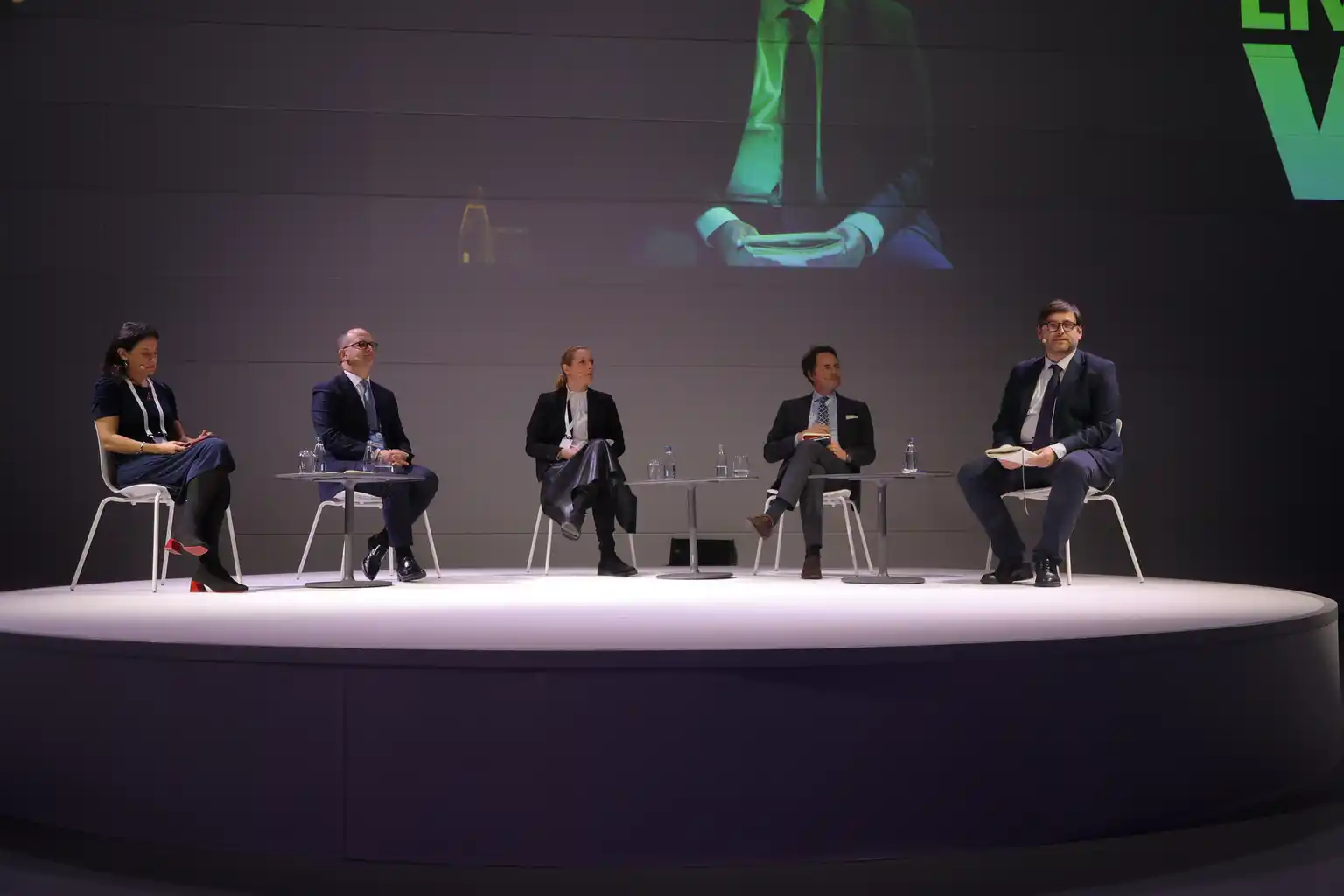
Fredrik Wesslau, Senior Policy Fellow at the European Council on Foreign Relations, highlighted the risk that upcoming elections across Europe, particularly in France, could strengthen opposition to EU enlargement. He stressed that public scepticism towards enlargement in France could pose a significant obstacle to the accession of candidate countries, including Montenegro, because ratification of the accession treaty might be subject to a referendum. At the same time, he noted that the European Commission increasingly views enlargement through a security lens, while Ukraine’s unique circumstances will require a bold and creative approach to accession.
The panel ended with a video address by Anita Orbán, Deputy Prime Minister and Minister of Foreign Affairs of Hungary. Ms Orbán reaffirmed Hungary’s commitment to cooperation with Serbia and its support for Serbia’s EU integration, offering symbolic encouragement for further democratic change in Serbia and the wider region. She also expressed Hungary’s willingness to share with Serbia’s new government the lessons learned during its own first six months in office.