

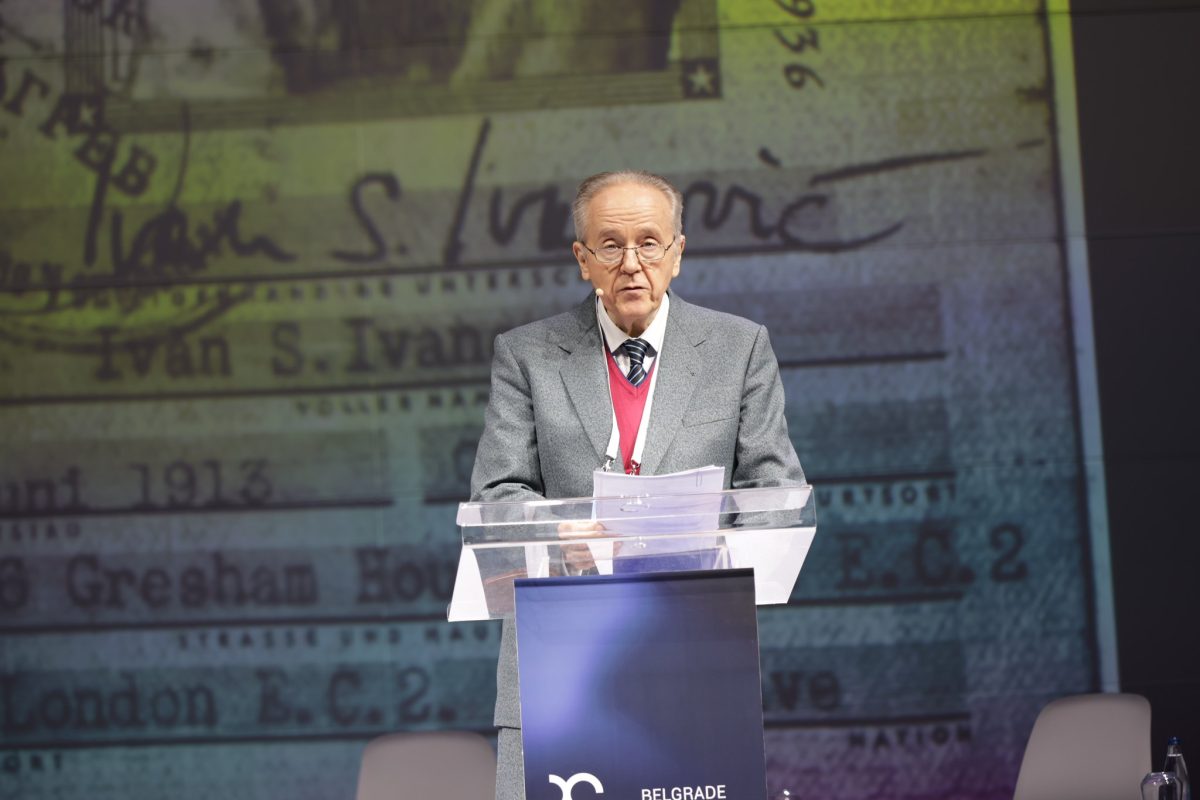
Each year, the Belgrade Security Conference (BSC) dedicates its edition to a historical figure from Serbia or the wider region who stood for freedom, democracy, human rights and European values.
This year, the conference was dedicated to Vane Ivanović (1913–1999), an athlete, diplomat and writer, and one of the founders of the European Movement, where he headed the Yugoslav section for some three decades.
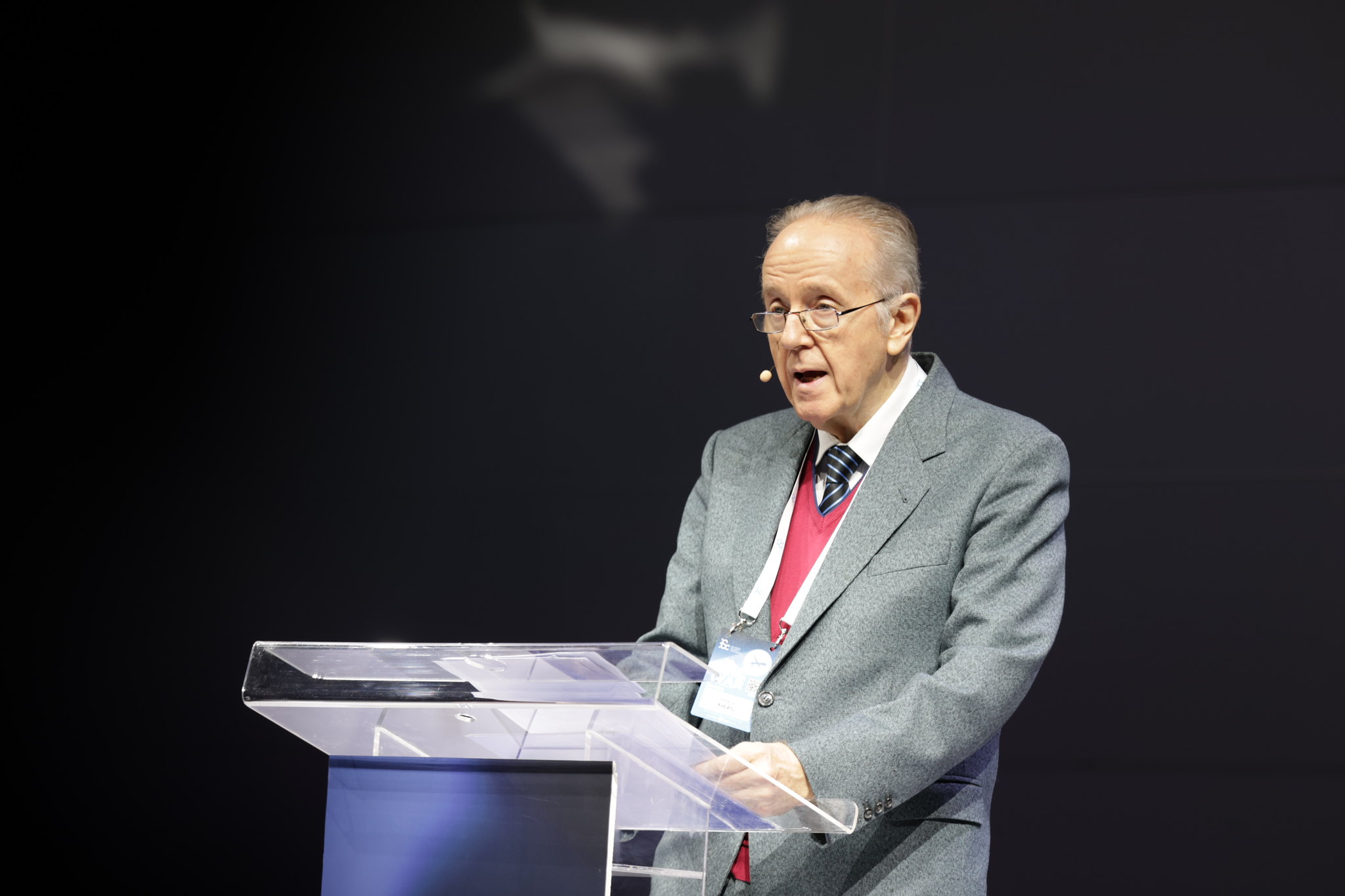
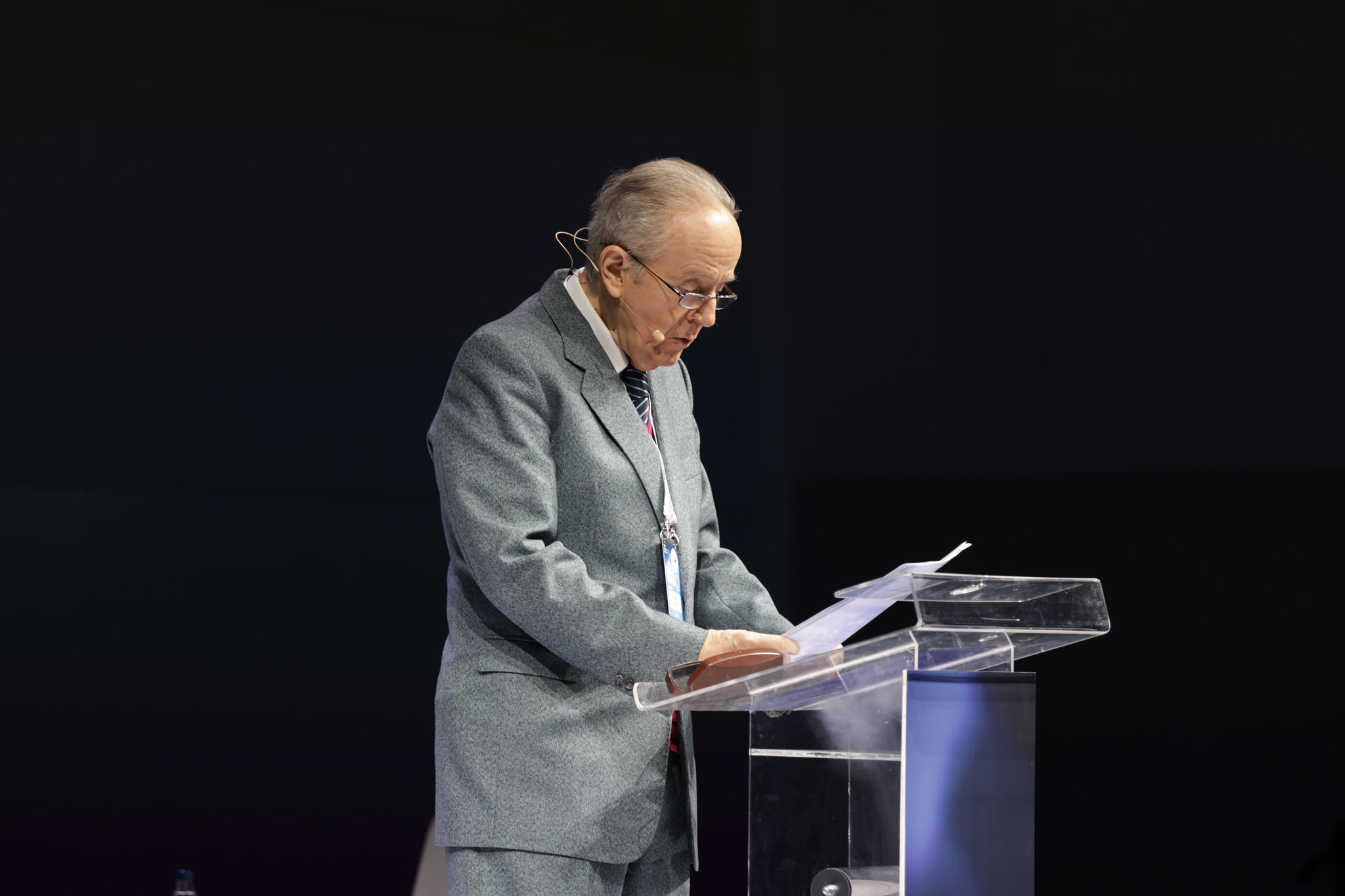
As part of the tribute, sociologist and writer Aleksa Đilas delivered a 15-minute speech in Ivanović’s memory. He portrayed him as a Cambridge graduate, Olympian, officer, shipowner, philanthropist and diplomat – a man who was “curious and restless by nature” and who sought to perfect everything he took on.
An athlete who believed in fair play
Mr Đilas began with Ivanović’s sporting career. Ivanović became Yugoslav champion in the 110- and 400-metre hurdles. He kept training and competing across South America while also working in Buenos Aires. He was one of the last true amateurs in international athletics, competing with no prize money and no paid coach. Mr Đilas emphasised his role as a member of the Yugoslav team at the 1936 Berlin Olympics.
There he befriended Jesse Owens, whose victories shook Nazi racist ideology. Together with triple-jump champion Jovan Mikić Spartak, he also arranged for the Yugoslav team to refuse the Nazi salute as they passed Hitler’s reviewing stand, which most other teams had given. Mr Đilas stressed Ivanović’s firm belief that “sport brought nations together” and helped the cause of world peace. He added that in later life, Ivanović took up spearfishing. His book Modern Spearfishing was translated into several major languages, and he campaigned for the protection of the seas.
Anti-fascist, philanthropist and diplomat
Mr Đilas then turned to Ivanović’s political and diplomatic work. During the Second World War, the shipping company run by his stepfather Božo Banac, with Vane’s help, placed some thirty merchant ships with Yugoslav crews at Britain’s disposal. After the war, Ivanović founded, ran and largely financed the Association of Free Citizens of Yugoslavia, which supported émigrés including Slobodan Jovanović and Miloš Crnjanski. Inspired partly by Jean Monnet, he led the Yugoslav section of the European Movement for about three decades. He entered European diplomacy in 1967 as Monaco’s Consul-General in London.
Ivanović was also a leading figure in the Democratic Alternative. This émigré forum was founded in 1963 and was the only organisation in exile that brought together members of all the peoples of Yugoslavia. Mr Đilas set out its vision: a gradual, non-violent transformation of Yugoslavia into a democracy with human and civil rights, a free press and an end to the party’s monopoly. It wanted a multiparty parliamentary system and genuine federalism, closer ties with Europe, and a country that stayed outside military blocs. Ivanović held to this position on neutrality throughout his life, firmly opposing Yugoslav membership of the Atlantic Pact.
A personal friendship
The most personal part of the speech covered Mr Đilas’s own friendship with Ivanović, which began in London in 1975. Their political collaboration had to stay secret at first. It became public in 1980, when Mr Đilas began writing under his own name for Naša reč, the monthly edited by Desimir Tošić, and as a result he became a political émigré. In the early 1980s, Đilas and Ivanović jointly edited Democratic Reforms and A Collection on Human Rights, the first work of its kind in their language. With Tošić, they also translated the main dissident texts of the period into English. Mr Đilas recalled the everyday work of exile as well: campaigning for arrested dissidents, raising money to print banned books, and long evenings of work at Ivanović’s London home.
He remembered Ivanović as a true English gentleman, who also had “our directness and warmth.” He was generous with praise, free of envy and full of energy. At seventy-one, he was still diving and running ten kilometres a day. Born to a Croat father and a Serb mother, Ivanović stayed loyal to his Yugoslav identity even after the country broke apart in the 1990s. He turned down the chance of a high position under the new Croatian regime. Mr Đilas closed by describing him as one of the greatest optimists he had ever known, a man who saw life as “a magnificent mystery” worthy of deep respect.