
November 18, 2026 BSC
The panel Abandoning Democracy for Nation (BSC2026) brought together four experts to discuss the intersection of nationalism, group identity, and democratic backsliding in voter behaviour and electoral strategy. The panel was moderated by Nevena Mijatović, a Research Associate at the Institute for Philosophy and Social Theory at the University of Belgrade. The panel’s title is taken from a newly released book of the same name by Filip Milačić, Senior Researcher for Democracy and Society at FES Democracy of the Future, who also participated in the discussion as a panelist.

The main thesis of Milačić’s book is that nationalism represents an underdetermined explanatory variable in attempts to explain and understand contemporary cases of democratic backsliding. Authoritarian parties around the world deploy threat narratives that portray themselves as the true defenders of a nation under attack. This narrative is highly potent and has the potential to override the preferences of voters who, under normal circumstances, would support democracy. Milačić concluded by arguing that these nationalist threat narratives can only be countered by offering a compelling alternative narrative. He also warned against strategies that seek to outflank opponents by adopting even more hardline ethnonationalist positions, noting that such strategies have historically been unsuccessful.

Zsolt Enyedi, Professor in the Department of Political Science at Central European University, noted that the nation-state is, and is likely to remain for the foreseeable future, the inescapable basis of modern state politics. He argued that attempts to move beyond national conceptions and nationalist politics have had mixed results at best, but that there is considerable malleability in what nationalism can mean. He concluded that an effective counternarrative would need to put forward some conception of the nation, pointing to the “humanizing nationalism” of figures such as Magyar as an example.
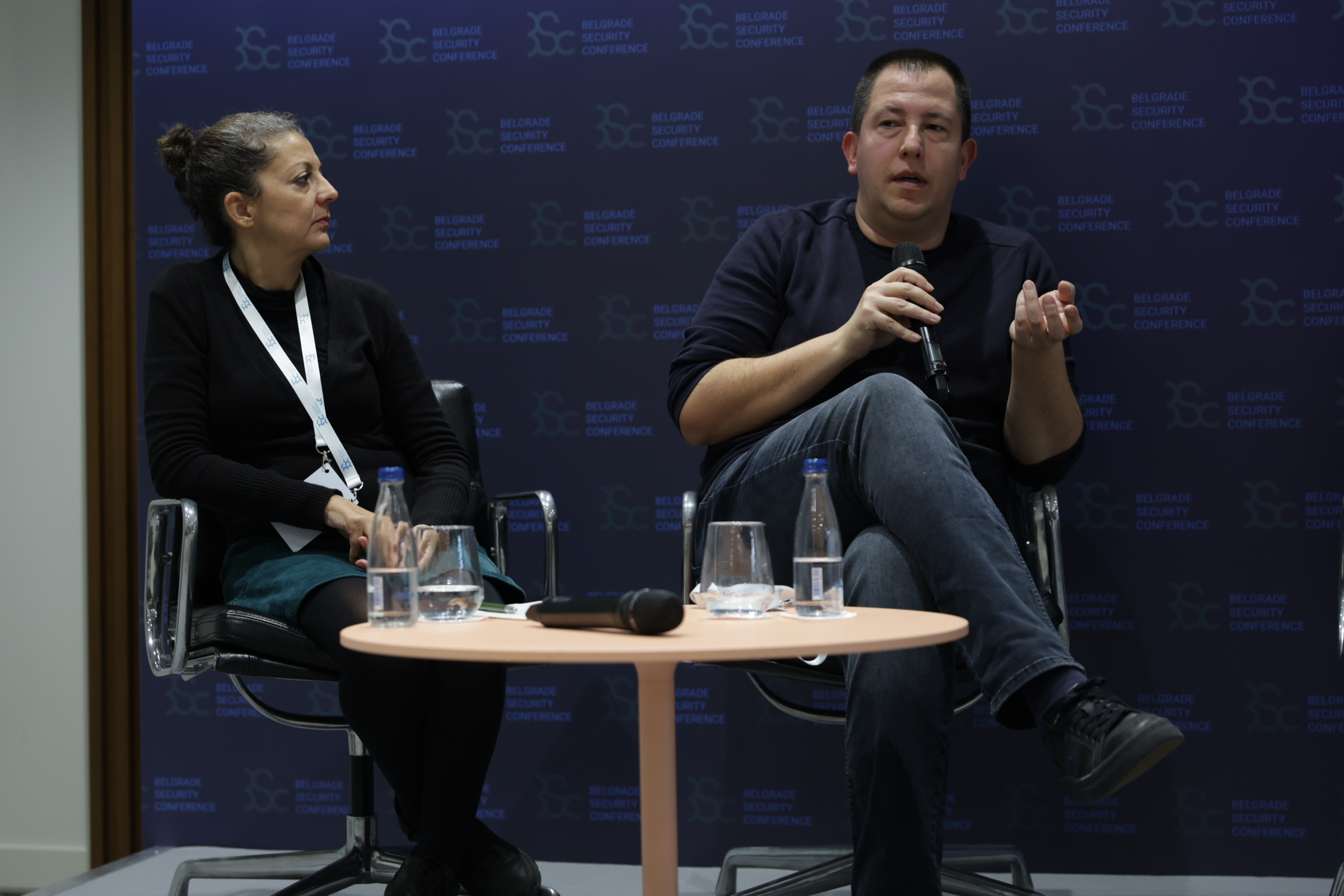
Dušan Spasojević, Professor at the Faculty of Political Science at the University of Belgrade, added that the prioritisation of partisan loyalty over democratic commitments can also be observed in political contexts beyond appeals to the nation. Pointing to Montenegro, he noted that the pro-European wing of society is the one willing to accept democratic stagnation, in this case in exchange for the “higher” goal of EU accession. In this way, Spasojević argued that the prioritisation of partisan interests remains a concern for democratic governance even outside the nationalist context. He concluded by noting that this dynamic may become relevant in the Serbian context, as people will need to learn to set aside some of their strong emotional affinity for the student movement in order to fairly assess and critique the work of the new parliament.

Anil Duman, Professor and Head of the Department of Political Science at Central European University, addressed the economic dimension of the discussion, noting that nationalist and materialist concerns are not necessarily as much in tension as might be assumed. Rather, conceptions of the national community help shape and organise the economic and material community. This allows governments to determine economic winners and losers within the national sphere, justifying such decisions in terms of an overarching national interest. Authoritarian and nationalist governments can often use this logic to frame financial rewards for political allies, such as preferential government contracts, as serving the interests of the national community as a whole. Duman noted that the example of Turkey also offers insights into how these narratives can be countered. Rather than aligning with increasingly exclusive visions of who belongs to the nation, promoting a more inclusive conception of the nation can help advance good governance by linking accountability and democracy to respect for the authority of an inclusive understanding of the people, or the nation as a whole.