

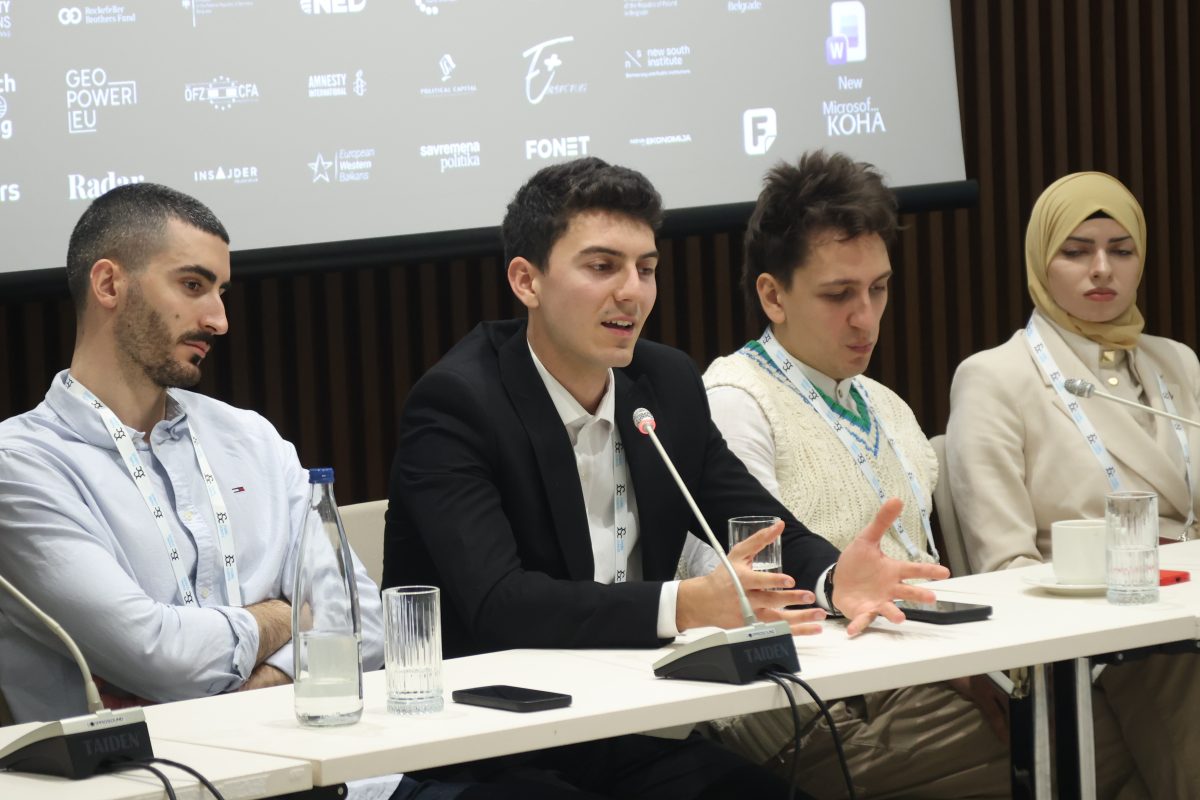
Young people across the Western Balkans are increasingly challenging established political structures, demanding accountability and taking a more active role in shaping their societies. At the Belgrade Security Conference, youth representatives from across the region discussed how growing civic mobilisation could lead to lasting democratic change, while addressing political distrust, corruption and the challenges of European integration.
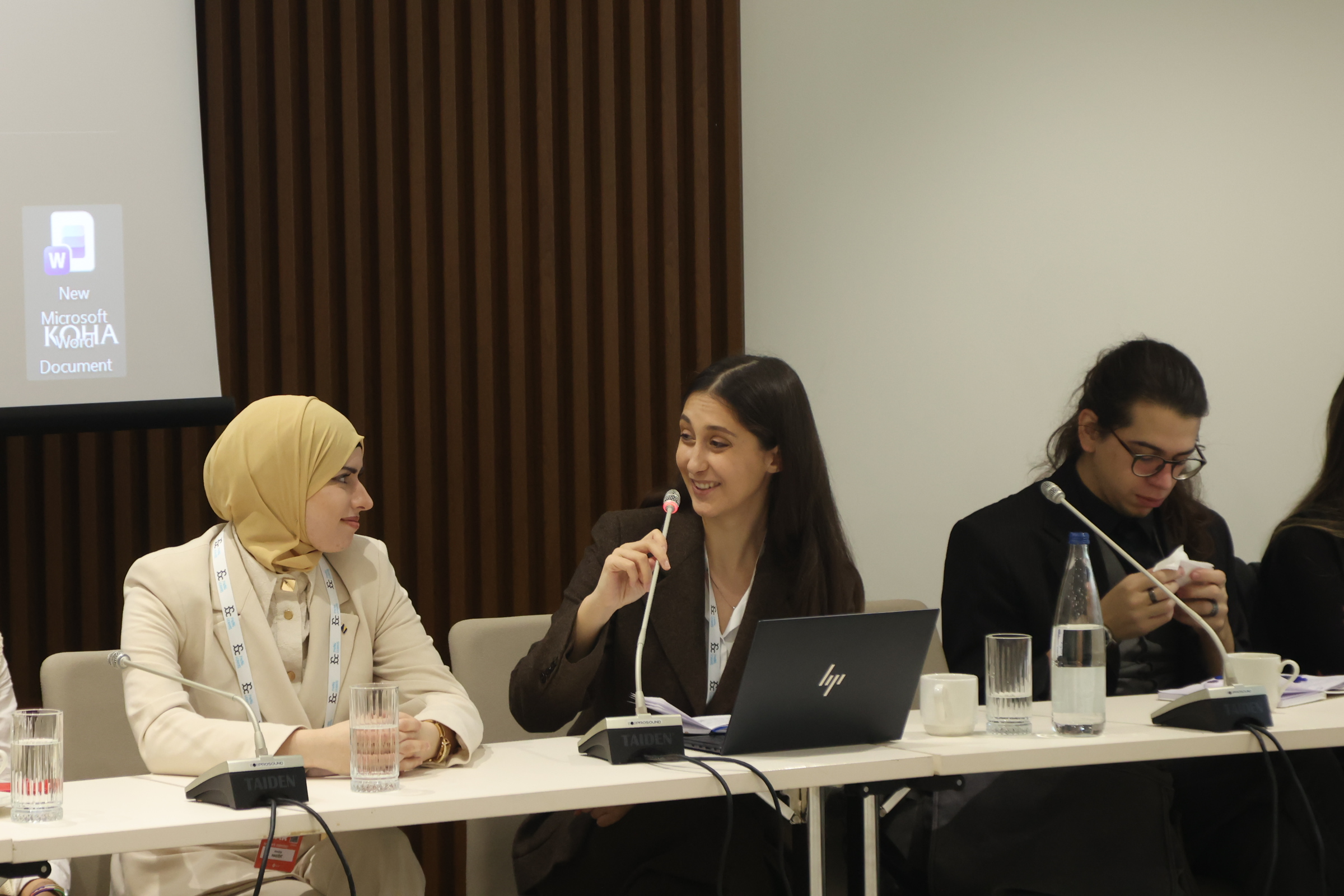
Moderated by Dina Abazović from Montenegro, the discussion brought together young leaders from Bosnia and Herzegovina, Serbia, North Macedonia, Kosovo and Albania. Velimir Milošev described recent developments in Serbia as a turning point for youth participation, arguing that student-led protests had united citizens from different political backgrounds around respect for the Constitution and the rule of law. He emphasised that lasting progress would require changes in political culture, stronger institutions and an end to clientelism, while expressing hope that Serbia’s transformation could strengthen regional reconciliation.
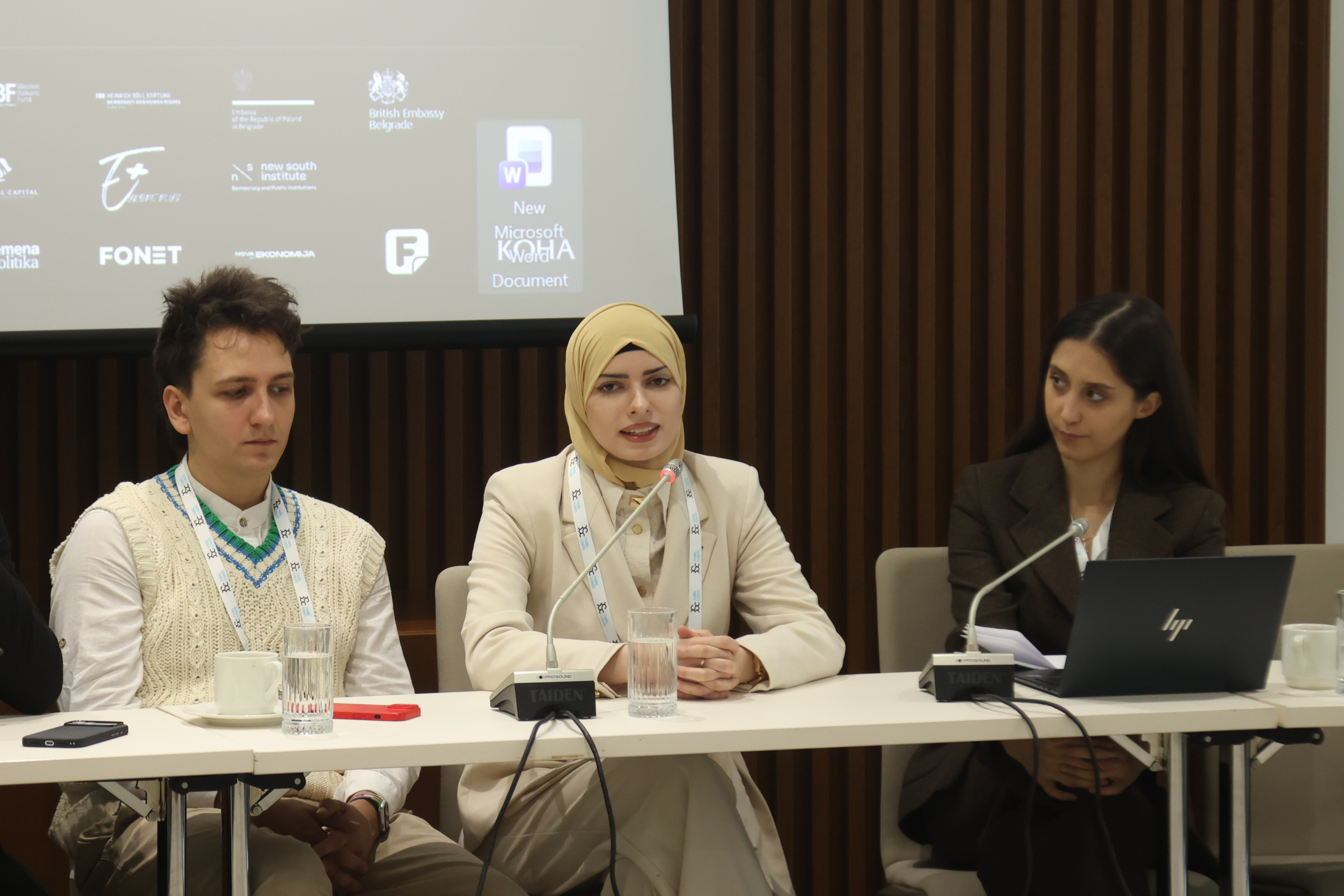
Addressing the European Union accession process, Amina Hadžić from Bosnia and Herzegovina stressed the importance of distinguishing between losing faith in the European idea and losing patience with the prolonged enlargement process. She argued that young people still see EU membership as an opportunity for better education, stronger institutions and a future in their communities. However, she highlighted that responsibility for the slow pace of reforms cannot rest solely with Brussels, particularly given Bosnia and Herzegovina’s fragmented political system. Hadžić also underlined that political stability should be a starting point for meaningful reforms rather than their final achievement.
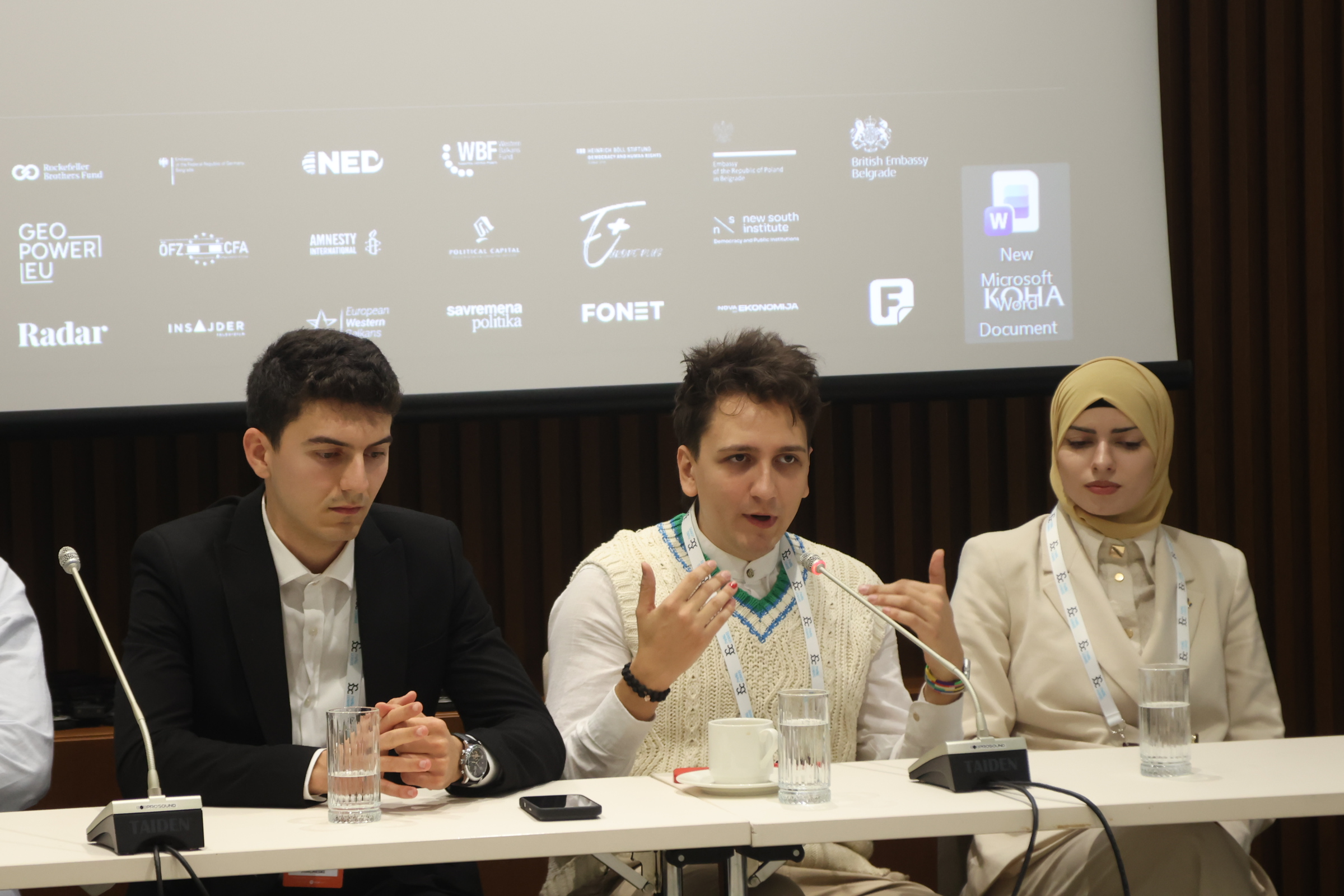
The experience of North Macedonia revealed the challenges of maintaining independent youth movements. According to Aleksandar Mircheski, student protests initially raised hopes for political change, but their momentum weakened as political parties took over and failed to deliver on public expectations. This left many young people disillusioned with traditional political structures. He called for stronger grassroots initiatives and continued civic engagement, warning that growing frustration over delayed European integration could create opportunities for foreign influence.
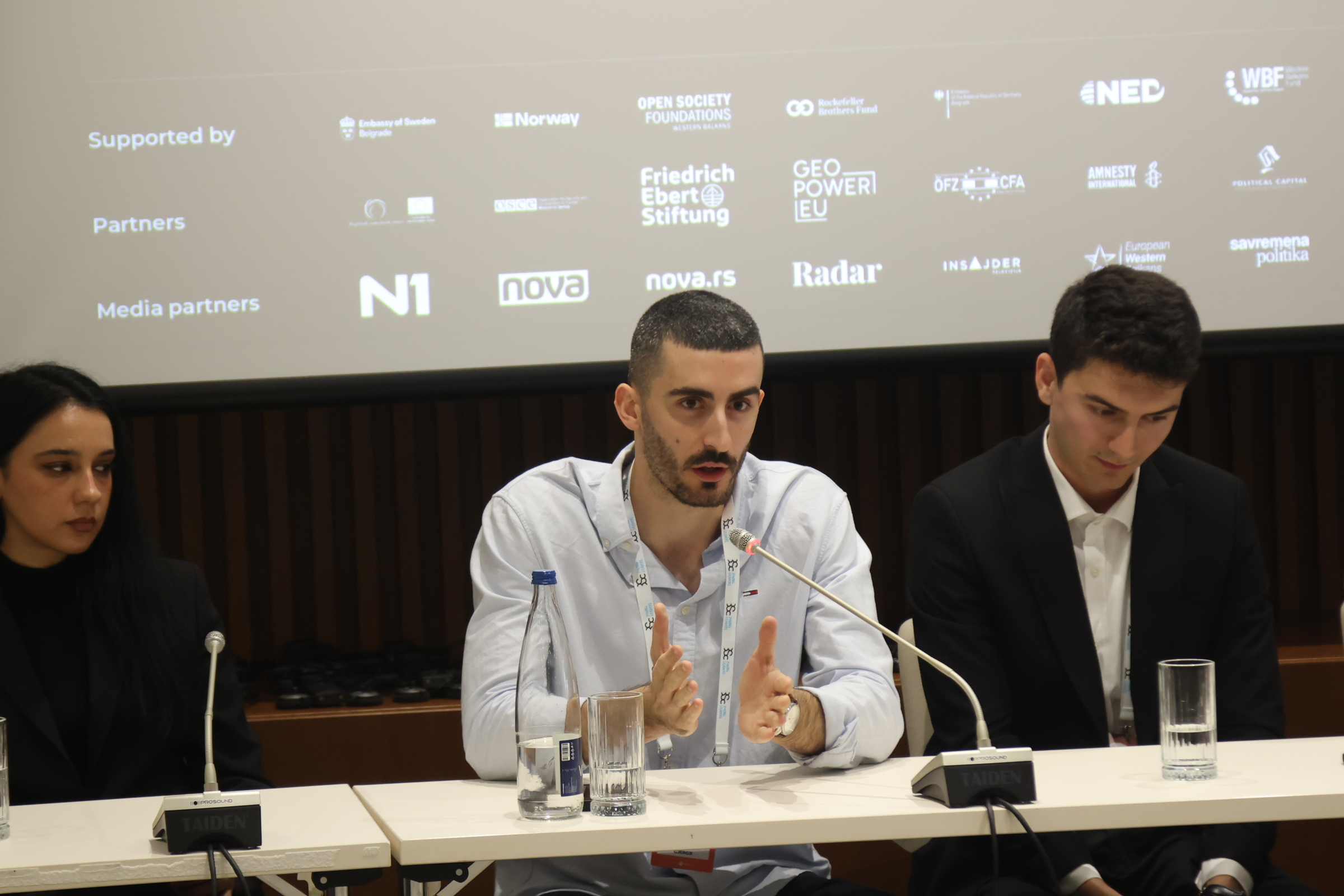
Rinor Gjergji from Kosovo pointed to recent youth-led protests as examples of how collective action can influence institutional decisions without the involvement of political parties. He referred to demonstrations demanding political stability and accountability, arguing that young people can bring about change through independent civic engagement. When it comes to the European Union, he underlined that EU accession is not simply a matter of waiting for Brussels to act. He argued that the region must first address its own shortcomings, from corruption to weak democratic institutions, noting that adopting European standards would benefit citizens even without formal EU membership. Meanwhile, Albanian journalist Fjoralba Sinoruka described demonstrations that began over controversial tourism developments and evolved into broader demands for political accountability, with protesters increasingly rejecting both the government and the established opposition.
The European Union alone emerged as a key message of the panel. Speakers pointed to the importance of tackling corruption, strengthening democratic institutions and upholding the rule of law as essential steps towards European integration. Closing the session, moderator Dina Abazović from Montenegro called on young people to take an active role in driving these changes, arguing that responsibility for shaping the region’s future ultimately lies within its own societies…