

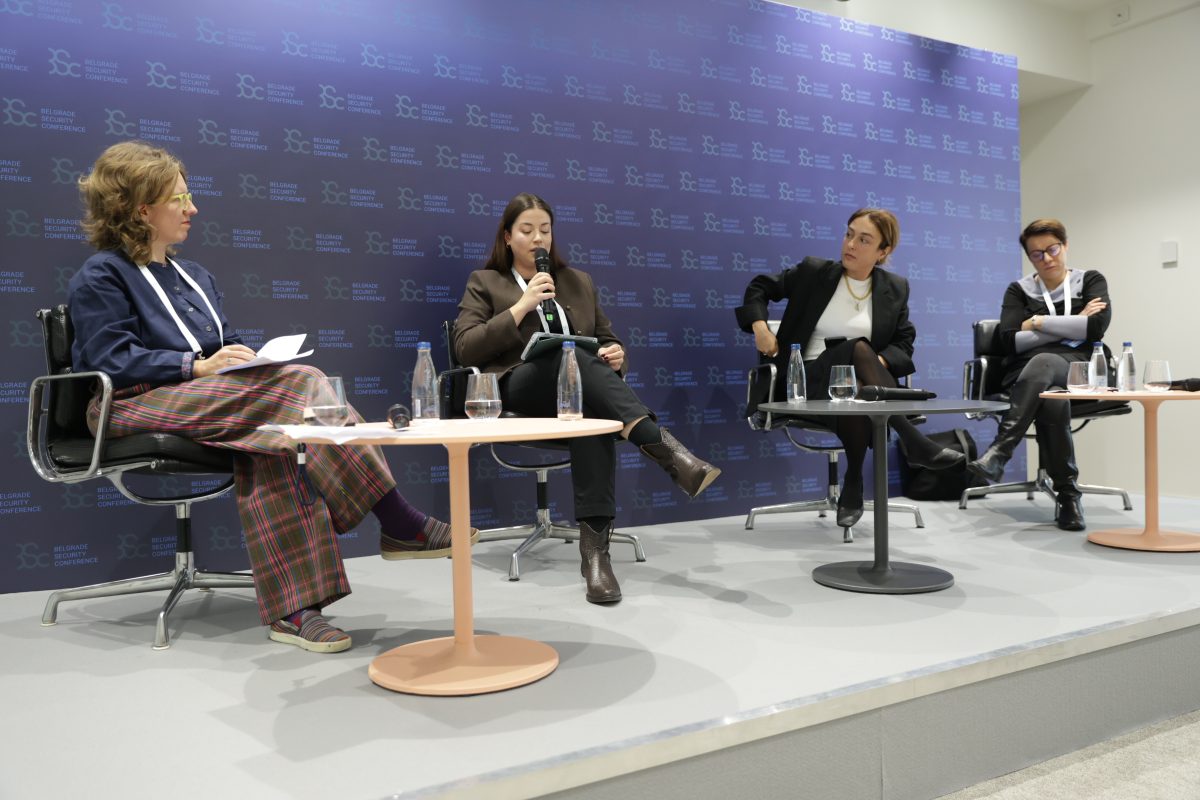
At the Belgrade Security Conference, panel moderator Gábor Trenko, Senior Policy Officer at Amnesty International, opened the discussion titled “Canary in the Coal Mine: Activism Resisting Authoritarianism in Georgia, Moldova and Serbia”.
The discussion examined the challenges facing civil society, independent media, and democratic institutions in EU candidate countries exposed to growing authoritarian pressures and foreign interference. Panellists addressed the mechanisms used to silence dissent, including state-sponsored disinformation, the misuse of the judiciary, and restrictive legislation, alongside strategies for building democratic resilience, protecting civic space, and securing effective support from international partners. A clear consensus emerged: authoritarian practices are increasingly operating across national borders, and European policymakers must treat support for civil society and human rights as an essential investment in Europe’s own security rather than merely a transactional requirement.
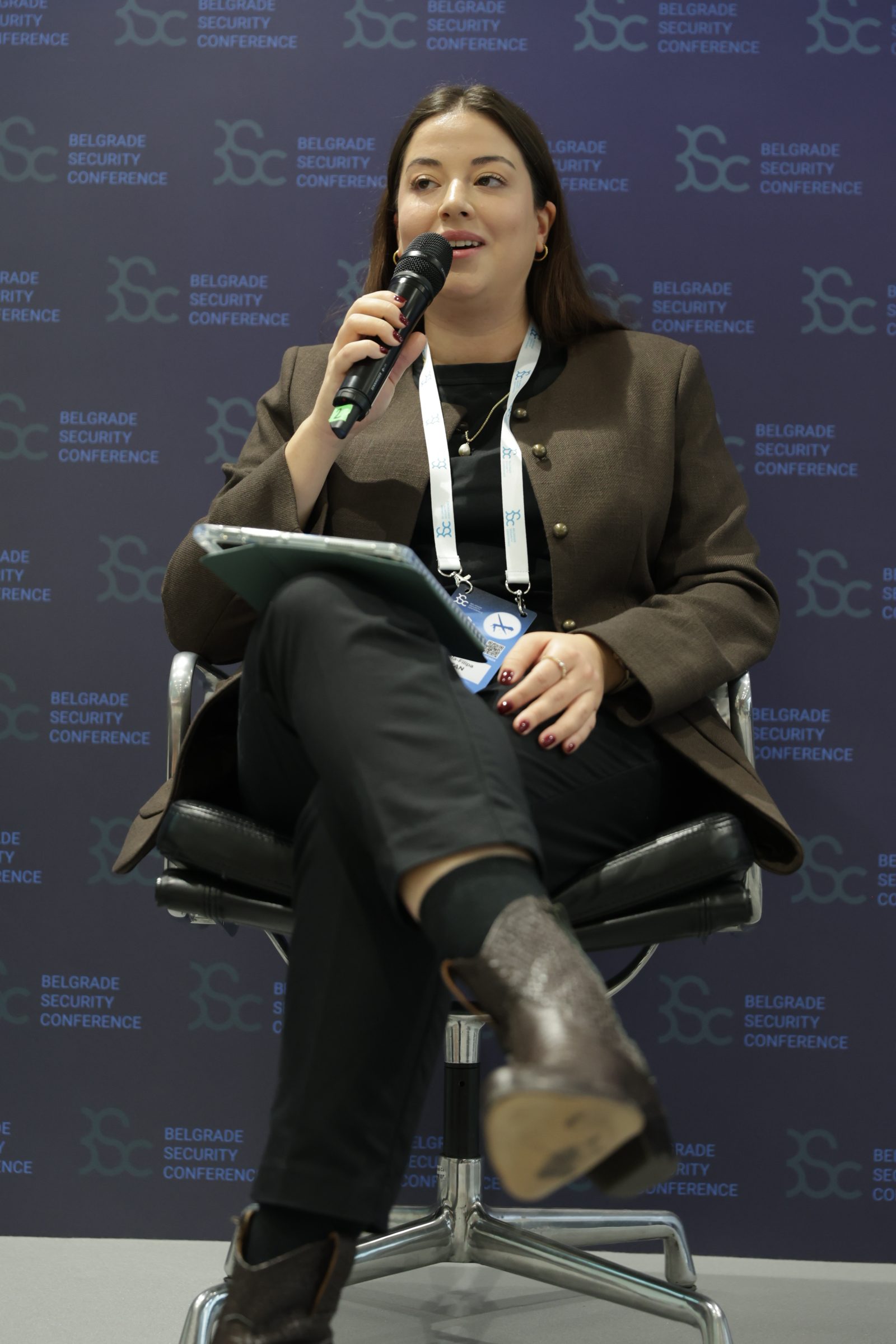
Daniela-Filipa Soltan, Human Rights and Advocacy Coordinator at Amnesty International Moldova, discussed the challenge of responding to foreign information manipulation while safeguarding fundamental freedoms. While reiterating her full support for Moldova’s European integration, she cautioned that “this process doesn’t mean that the ends must justify the means”. She highlighted how emergency measures introduced following the 2022 invasion of Ukraine led to the suspension of media broadcasting licences, while legislation preserving arbitrary administrative powers over media operations remained in place even after the state of emergency ended. Soltan also addressed the fast-tracking of EU accession legislation, which frequently bypasses mandatory public consultation periods and curtails civic participation. She drew attention to the chilling effect and self-censorship experienced by journalists and civil society organisations as a result of political polarisation and dependence on external funding. Soltan argued that “we cannot treat national security, democratic freedom, and human rights as opposing goals”, stressing that effective resilience requires transparent administrative oversight, institutional safeguards, and the systematic integration of civil society recommendations into the EU accession process.
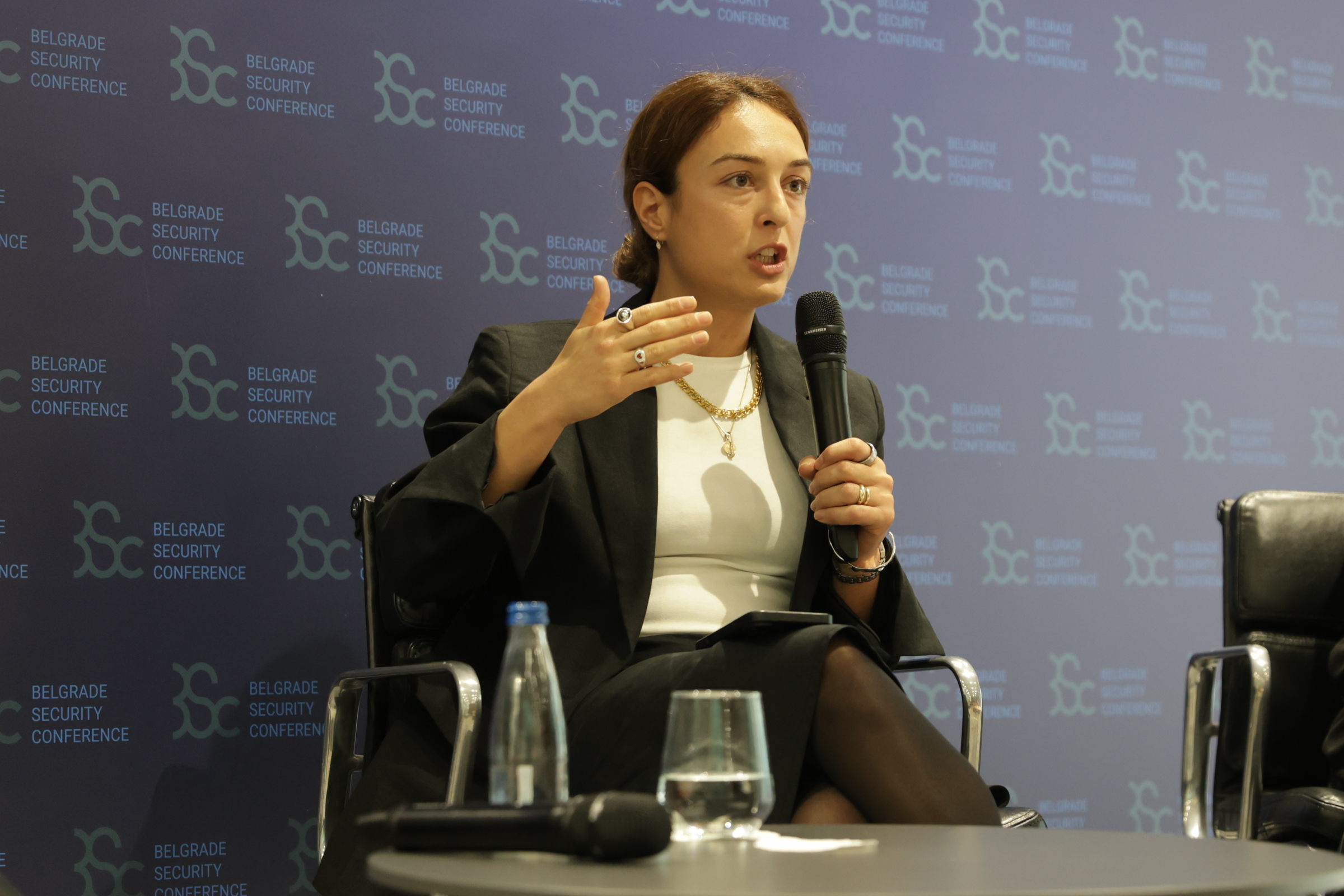
Ana Kakalashvili, a human rights lawyer from Georgia, examined the severe democratic backsliding taking place in the country despite strong public support for European and Euro-Atlantic integration. She described how government policies have stalled Georgia’s EU accession process, contributing to the closure of non-governmental organisations, the silencing of independent media, and the intimidation, prosecution, or exile of human rights defenders. Kakalashvili underscored Georgia’s strategic geopolitical position as a transit corridor and deep-sea port hub, warning that Russian and Chinese influence is expanding into key infrastructure while Western leverage appears to be diminishing. Arguing that Western partners are losing the narrative battle to Russian propaganda, she called for targeted sanctions against corrupt actors, the preservation of visa-free travel and Erasmus programmes for young people, and a sustained European presence on the ground. “Come to Georgia, go to the regions, and talk to the ordinary people. Pick up on the soft power game,” she urged European policymakers.
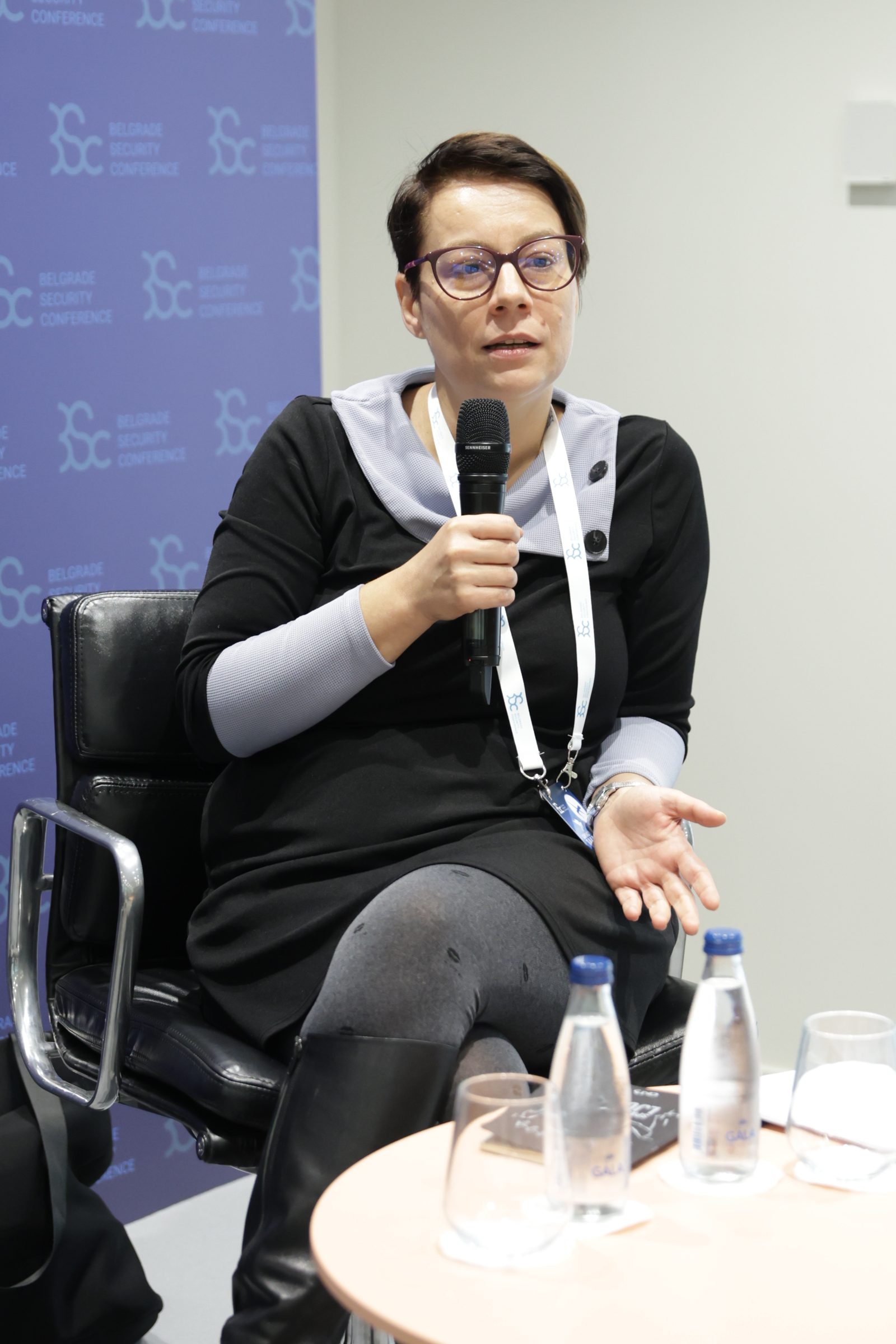
Maja Stojanović, Executive Director of Civic Initiatives, analysed the long-term process of state capture in Serbia, tracing its development since 2012. She explained how independent regulatory and anti-corruption bodies established after 2000 were progressively dismantled, while the EU accession framework relied heavily on formal box-ticking exercises that failed to reflect the erosion of democratic standards on the ground. Stojanović criticised international actors for prioritising superficial political stability and engaging exclusively with state authorities, reminding them that “stability is not about one authoritarian leader not making a mess—it’s about institutions and the rule of law” and that “the flag doesn’t mean the European Union; flags are supposed to mean values.” She also highlighted the emergence of new forms of civic action, noting how informal student movements and local initiatives have successfully re-engaged the public by focusing on tangible community concerns. Emphasising that while “you cannot make the momentum, you can build it,” she urged international partners to provide direct support to citizen-led democratic movements.
The discussion concluded with contributions from the audience, focusing on judicial independence and legal arguments in domestic courts. In response to questions about how national judiciaries handle human rights cases, Soltan noted that judicial vetting in Moldova had revealed deep-rooted corruption, leaving the Supreme Court severely understaffed, while files relating to past cases of police violence remained classified. Stojanović highlighted how courts in Serbia have increasingly served as instruments for imposing administrative penalties on peaceful protesters, while cautioning against framing international relations as a binary choice between EU integration and Russian influence. Panellists emphasised that democratic resistance must remain anchored in fundamental human rights, transparent governance, and active public participation.