

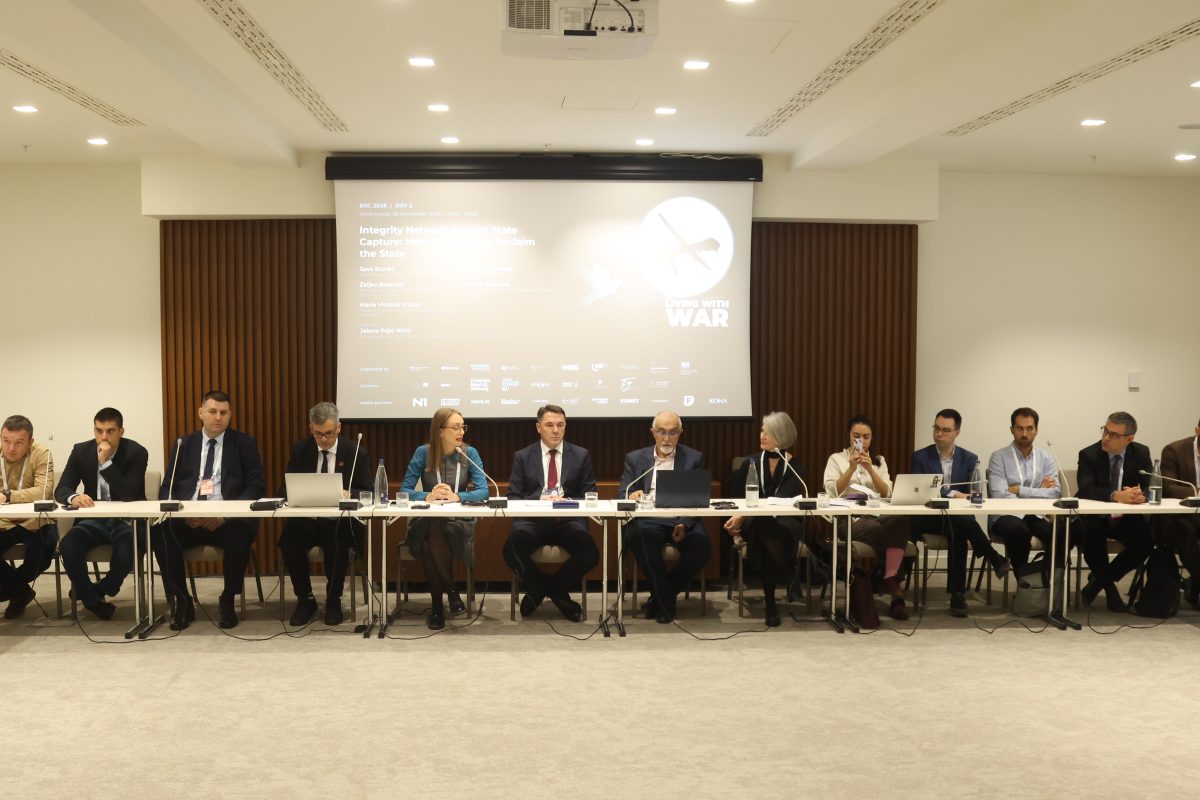
At a roundtable held on 18 November 2026 as part of the Belgrade Security Conference (BSC), panellists examined concrete steps to dismantle state capture and rebuild institutions following democratic change, placing special emphasis on safeguards to prevent capture from recurring.
Moderator Jelena Pejić Nikić, Senior Researcher at the Belgrade Centre for Security Policy (BCSP), noted that mapping and empowering “pockets of integrity” across the judiciary, police and media was vital to keeping institutions from collapsing under pressure, stressing that these three sectors are “the main elements of state capture and the main elements of uncapturing it.”
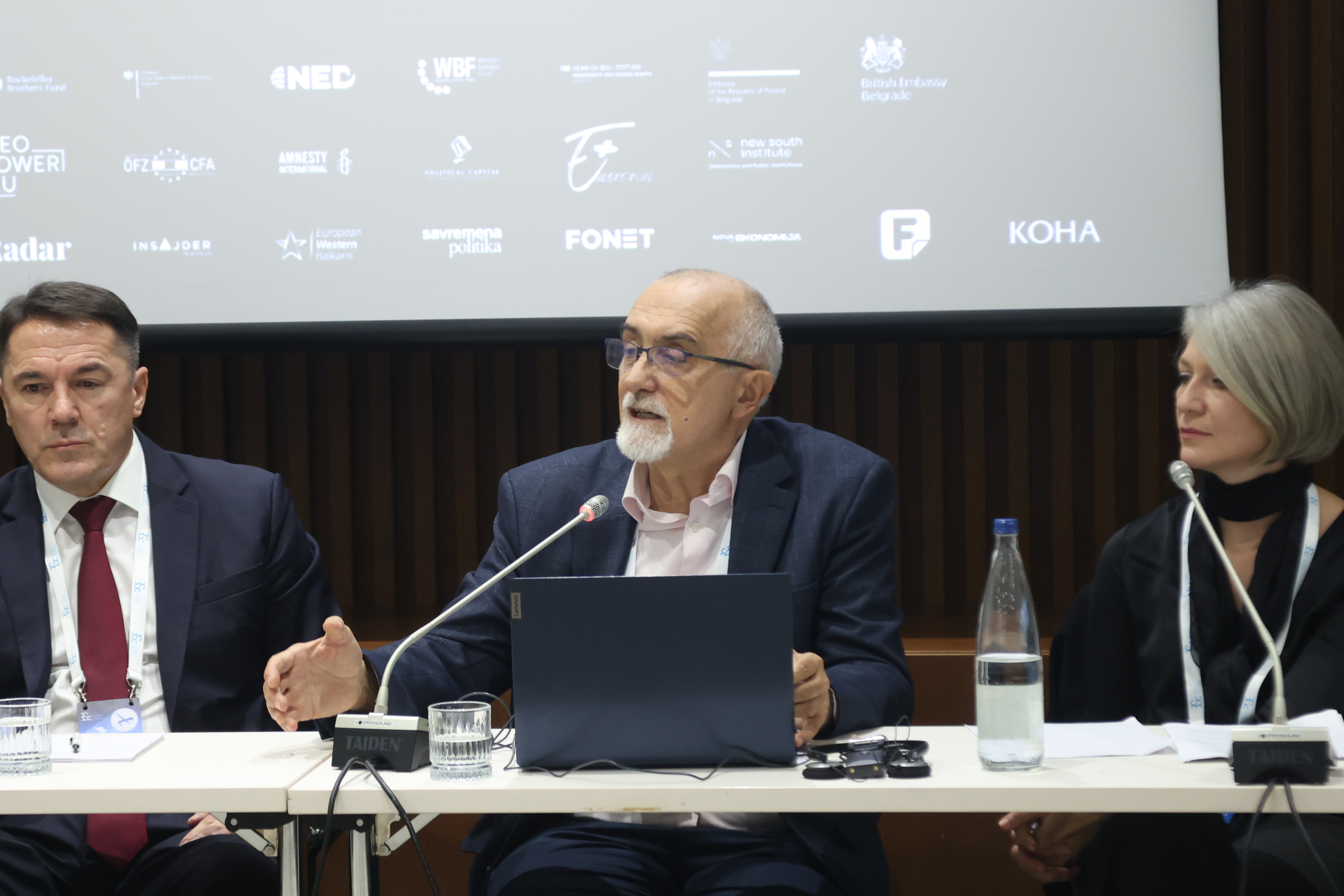
Analysing conditions and safeguards in the judiciary and police, Savo Đurđić, retired judge of the Appellate Court in Novi Sad, pointed to nearly one million unresolved cases and stalled proceedings, while the prosecution only began waking up just ahead of the elections by ordering decisions on citizen complaints within 48 hours. Warning against mere cosmetic changes or leaving loopholes for extra-institutional pressure, he stated that “there must be no more simplified procedures” and called for disciplinary and criminal accountability, an operational prosecutorial police, administrative court reform and transparent public debates.
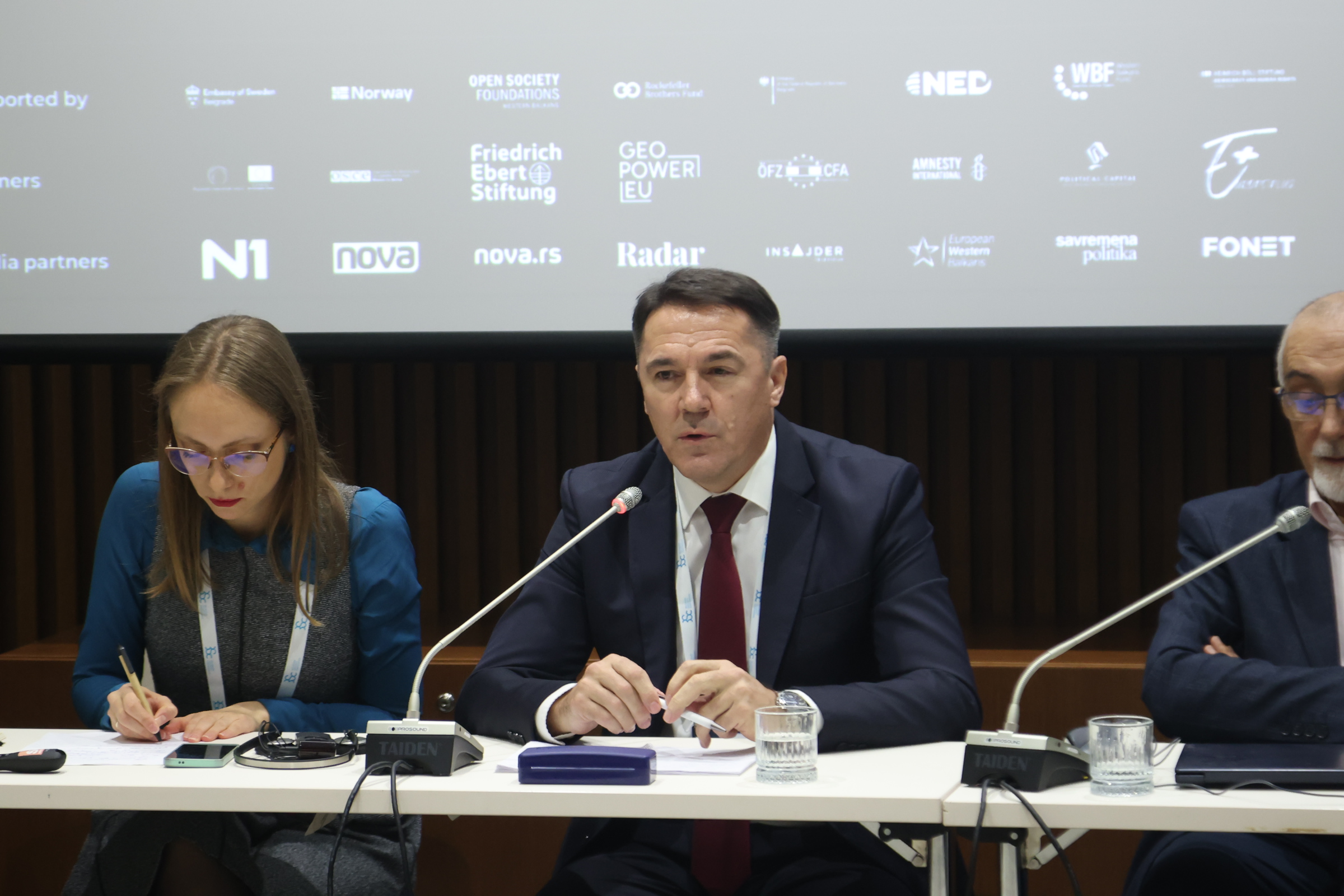
Bogoljub Živković, retired Police General, assessed that state capture was most visible in the police being reduced to a political tool, emphasising that recovery requires immediate personnel changes, a stable organisational structure, clear legal separation between the minister and an operationally independent Police Directorate, reformed internal and civilian oversight and accountability for command inaction. He cautioned that “this must be a process, and it must be clearly planned and implemented precisely so that something like this is not allowed to happen to us again.”
Addressing the media sector, Željko Bodrožić, President of the Independent Journalists’ Association of Serbia (NUNS), noted that Serbia fell to 104th place on the Reporters Without Borders World Press Freedom Index (its worst result in 23 years), while attacks and pressures against journalists were recorded over the past year continuously. Bodrožić emphasised that lasting protection of media freedom requires a fresh election of all members of the REM Council, reviews of public broadcasters, individual accountability for violating professional standards and stronger labour protections for young and local journalists, stressing that “the goal must be building a system that guarantees the public service belongs to the citizens and that its editorial policy will not depend on the authorities.”
Drawing on regional lessons on preventing backsliding, Lenche Ristoska, former prosecutor and co-founder of the Institute for Transparency and Integrity in North Macedonia, highlighted that financial independence of the judiciary and prosecution from the executive, dedicated prosecutorial investigative centres and specialised units for external oversight of the police are vital for dispersing power. She warned that some networks can exploit opportunism within heterogeneous movements and invoke “national and political reconciliation” to evade criminal liability, urging participants to “never make compromises with justice” and emphasising that media and civil society must not “fall asleep” but continue to critically observe the new authorities.
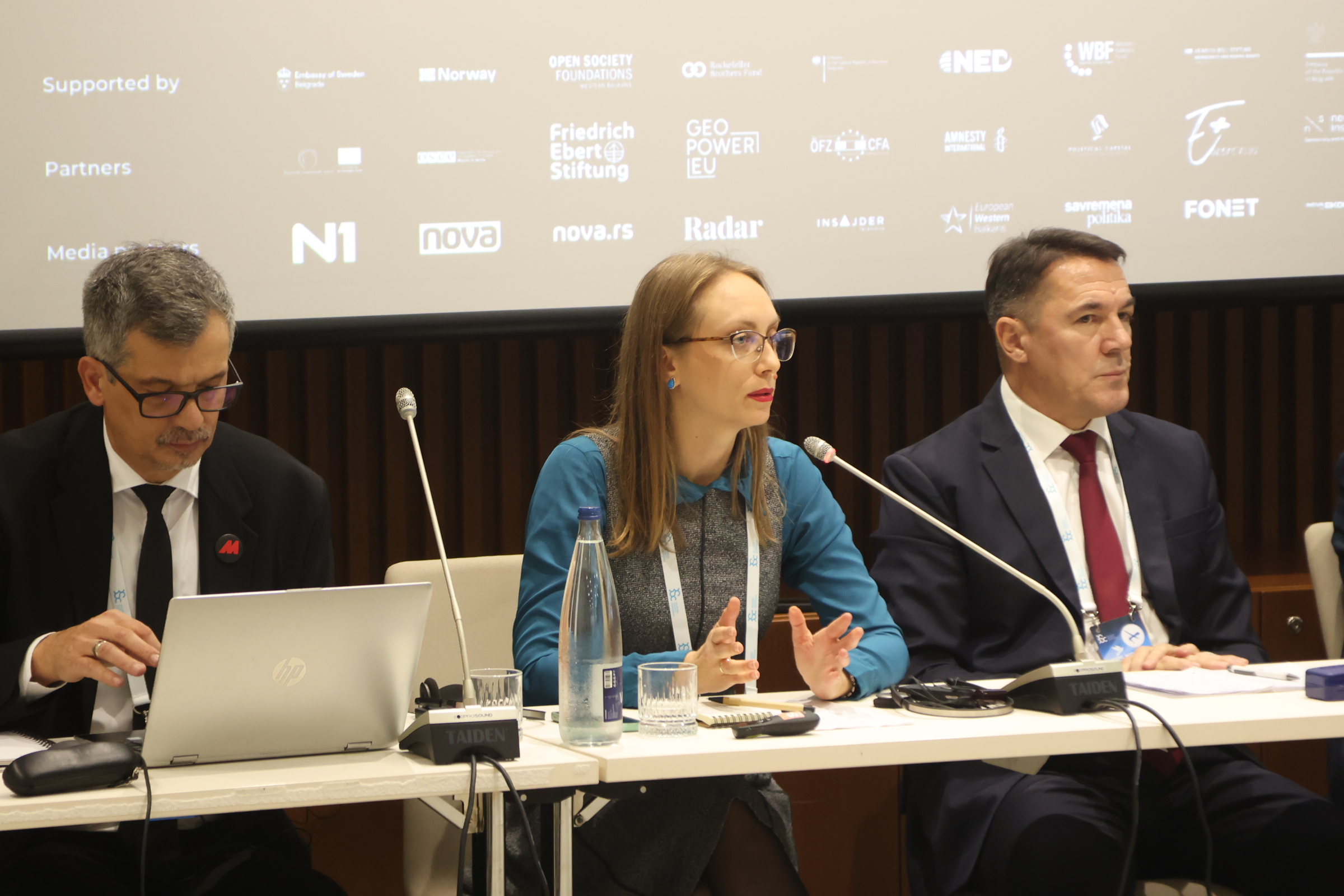
Framing the central legal dilemma of democratic transition, moderator Jelena Pejić Nikić asked Maria Victoria Kristan, a legal scholar at the University of Bologna, “How much can we bend the law in order to re-establish it again?” Kristan replied that restoring the rule of law does not mean returning to the pre-existing order that enabled state capture nor engaging in revenge, as “legal means fail the test; it is the same abuse with new owners”, pointing to Poland’s 2015 constitutional crisis as a cautionary tale. Instead, she explained that any departure from blocked formal rules must remain strictly conditional, proportionate, publicly reasoned and universally binding on the new majority as well.
During the Q&A session, the audience raised three pressing issues critical to preventing future abuses: how to ensure professional governance in the defence sector and close the Criminal Procedure Code loophole that prevents victims from taking over prosecution when prosecutors dismiss complaints or stall investigations; how to revitalise independent trade unions across public institutions and the media; and how to reform legal education while enforcing existing codes of ethics across public services.